


The Seaplane’s Sustainability Promise: A Case for the Amphibious Cessna C208B-EX
As global eco-tourism expands into remote and environmentally sensitive regions, the aviation industry faces growing scrutiny over its ecological footprint. Among the solutions emerging from this evolving dialogue is the Cessna C208B-EX Caravan equipped with Wipline 8750 amphibious floats. Initially conceived in the 1980s and continuously refined for operational sustainability, the amphibious Caravan offers a compelling model of how modern aircraft can meet the dual imperatives of access and conservation. This article presents an environmental case for the use of quiet and environmentally clean seaplanes in national parks, marine reserves, and other ecologically sensitive areas, appealing to the standards of civil aviation authorities, harbour masters, and environmental stewards.

Preservation Through Access Without Infrastructure
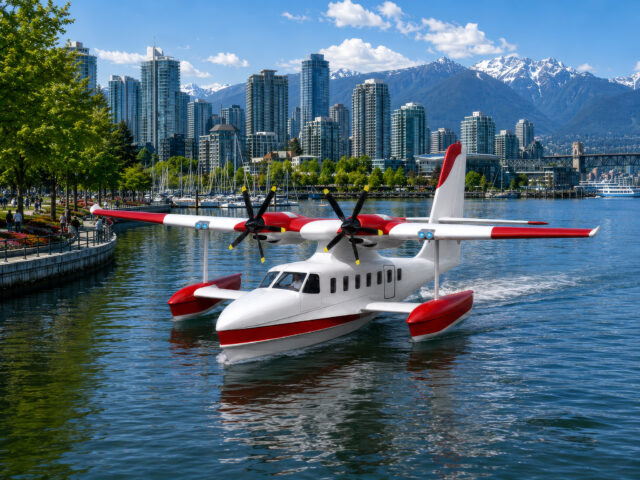
A defining feature of the amphibious Caravan is its ability to take off from airports and land on water. This makes it an excellent option for transporting passengers from major commercial centers with airports to remote destinations that lack aviation infrastructure. Navigable waters serve as seaplane runways. Unlike traditional aircraft, which require constructed runways or helipads that can have lasting environmental impacts, the Caravan can operate on lakes, rivers, and coastal waterways, leaving no physical trace—no concrete construction, no deforestation, and no soil compaction. In ocean atolls or along remote island chains, the Caravan’s ability to use natural waterways eliminates the need for intrusive access roads or airstrips, making it an ideal choice for “leave-no-trace” tourism.

Minimizing Acoustic Intrusion: Neighbours and Wildlife
One of the most frequent objections to aviation activity in ecologically sensitive areas is the potential for noise pollution to disrupt both human enjoyment and wildlife behaviour. However, the Caravan has one of the quietest acoustic signatures among powered aircraft in its class. At takeoff, it generates 83.5 dB(A) and declines to 76.9 dB(A) at 2,000 feet. For reference, this is lower than many helicopters (e.g., the Robinson R44 often exceeds 90 dB(A)) and recreational watercraft, such as jet skis and outboard boats, which can emit 90–100 dB(A) at close range.
This noise efficiency is the result of its slow-turning propeller (operating at only 1,900 RPM) and a Pratt & Whitney turbine engine designed for low emissions and reduced vibrational output. Unlike piston engines with high rpm propellers or helicopters with broad blades, which produce low-frequency noise, particularly disturbing to birds and mammals, the Caravan’s higher-frequency output dissipates more rapidly with distance. Importantly, studies suggest that aircraft flying above 1,000 feet generally do not disturb terrestrial wildlife. The Caravan’s ability to select waterborne approach and departure paths allows it to maintain such altitudes over land, further minimizing ecological impact.
Turbine-powered seaplanes generate unnecessary noise during landing and docking procedures, when the pilot engages Beta or Reverse thrust to decelerate. In these instances, noise levels can exceed 87 to 92 dB(A), necessitating the use of hearing protection by dock personnel. Although these elevated noise levels are brief, frequent docking may cause considerable disturbance, especially to nearby businesses. A practical solution for Caravan operations is straightforward: pilots should be required to approach the dock without using reverse thrust. Instead, they should feather the propeller—or shut down the engine—when nearing the dock, allowing the aircraft to glide in quietly, a process often referred to as “ghosting.” Ghosting is precisely what it sounds like – gliding in without the sound and the fury.
Underwater Acoustic and Pollution Neutrality
Marine ecosystems, particularly those that harbour sensitive or endangered species, are increasingly affected by underwater noise pollution from shipping and recreational boating. The amphibious Caravan, however, avoids this problem entirely. Its propulsion system is mounted above the waterline, meaning it generates no underwater mechanical noise. Unlike vessels that transmit vibrations through submerged propellers and shafts, the seaplane’s acoustic energy reflects off the water’s surface and does not penetrate into the aquatic environment. This characteristic ensures minimal disruption to marine fauna, including manatees, fish, sea turtles, and whales.

When on the water, the amphibious seaplane typically operates as a boat, except that the Caravan, mounted on squeeky clean Wipline 8750 floats, demonstrates environmental characteristics comparable to those of a canoe. It lacks an underwater propeller, drive shaft, or exhaust discharge below the waterline, thereby allowing it to float on the surface with minimal ecological impact. Canoes are generally considered among the most environmentally friendly vessels for aquatic environments, and the seaplane mirrors this low-impact presence, preserving marine habitats as it taxis, drifts, or sails peacefully along. In the Niger River Delta, residents of remote rainforest communities have referred to the Caravan amphibian as the “Flying Canoe.”

Emission Control and Spill Prevention
The Caravan’s environmental advantages are not limited to its noise profile. The Pratt & Whitney turbine engine is among the most efficient and clean-burning in the aviation sector. Burning highly refined Jet A-1 fuel with a near-complete combustion rate, it emits substantially fewer particulates and unburned hydrocarbons than marine diesel engines. More critically, aircraft engines are subject to strict maintenance and safety regulations that effectively eliminate the risk of fuel or oil leaks. Unlike boats—often serviced on-water, with lax disposal practices—the amphibious Caravan is mostly refuelled and maintained on land, with EPA-compliant catchment systems in place to handle residual fluids. Any engine oil or fuel leaks mandate an immediate grounding and repair, a standard rarely mirrored in maritime operations.

Displacement, Not Disturbance
Beyond emissions and noise, physical presence matters. The Caravan displaces less than 66 cm (3 ft) of draft in water, reducing the risk of contacting coral reefs, aquatic vegetation, or sediment beds. With no underwater propulsion, it poses no entanglement or collision threat to marine life, a known hazard associated with ships and fast-moving boats. While taxiing, the seaplane moves along at a leisurely 2-3 knots, and during takeoff and landings, it is only at high speed for short distances, thereby lessening the risk of knocking a dolphin or turtle on the noggin.

Operational Flexibility with Environmental Compliance
Whether deployed in Komodo National Park, Indonesia, or the atolls of the Maldives, the Caravan has consistently demonstrated its capacity to support tourism while upholding conservation goals. In scenarios where traditional vehicles would require concrete runways, bridges, or noisy boat passages, the Caravan offers a light, adaptable, and silent alternative. Its short takeoff distance and quick climbing departure profile allow pilots to route flights over water instead of sensitive protected habitats. In countries such as Canada, the U.S., and Australia, the aircraft is routinely used in regulated wilderness zones and marine parks—a testament to its proven environmental compatibility.

Conclusion: A Model for Sustainable Aviation Access
In an age where ecological stewardship must accompany mobility, the Cessna C208B-EX Amphibious Caravan sets a practical standard. It enables safe and regulated access to areas that would otherwise require disruptive infrastructure. It emits less noise, avoids underwater pollution, and operates with a near-zero tolerance for emissions and spills. As tourism shifts toward sustainable models, regulatory authorities should recognize and endorse aircraft like the Amphibious Caravan as part of the solution.
As the saying goes in eco-tourism:
“Leave nothing but your footprints.”
In the case of the seaplane, not even a footprint is left behind.
Where airports, helipads, and roads leave scars, this seaplane leaves only ripples.
The blog’s images were taken at the Amanwana Resort, built on an island nature reserve. The pictures and report were part of an environmental study I completed to obtain approval for Moya as one of the first DGCA-approved water aerodromes in Indonesia. This was before the EX and 8750 floats came out, but the song remains the same. Here are a couple of C208B-EX on Wipline 8750 pictures taken after landing near a remote island in the South Pacific.