



Kyiv Independent: Why Ukraine’s Story Could Be Canada’s
My blog’s opening title is a very generic statement meant to be read and interpreted in different ways: “Navigating Uncertainty.”
I attempt to clarify the ambiguity by adding my personal take on it: “Life is not like flying. When flying, I always know where I am going.”
Not that anyone asked, but I meant that although life’s course is uncertain, flying gives you direction and velocity while letting you choose your destination and timing. Life in general, and especially life under the constant threat of war, is not like that. Ukrainian citizens have faced uncertainty every day for the last four years and nine months of full-blown war. Twelve years, if you count since the day Russia invaded the Crimea.
No one expected the Ukrainians to hold out against a Russian military onslaught for this long. Not the Russians, and especially not the Ukrainians. Much of the reason they have held out and kept going is that they have found ways to determine direction and velocity. First and foremost is President Zelensky’s grit and determination. Secondly, it is the technological ingenuity of the Ukrainian military. Much of what they have used to maintain direction and velocity didn’t exist five years ago. World War Two changed how large international wars were fought. Guerrilla warfare changed how small countries defended themselves. Asymmetric warfare tactics using hunter-killer or kill-chain drone technology took that ability to defend yourself to another level. But holding out or surviving is not the same as winning.
When you depend on someone to provide you with the means to defend yourself, and they, in turn, let you down or outright abandon you, you have to either give up or learn to defend yourself. Looking back in the aftermath of being abandoned and agonizing about why you would put your security and economic stability in the hands of another country is a useless exercise in feeling sorry for yourself, blaming others for your predicament, or declaring that you are a victim and lashing out; it is all a waste of time and energy. Work the problem.
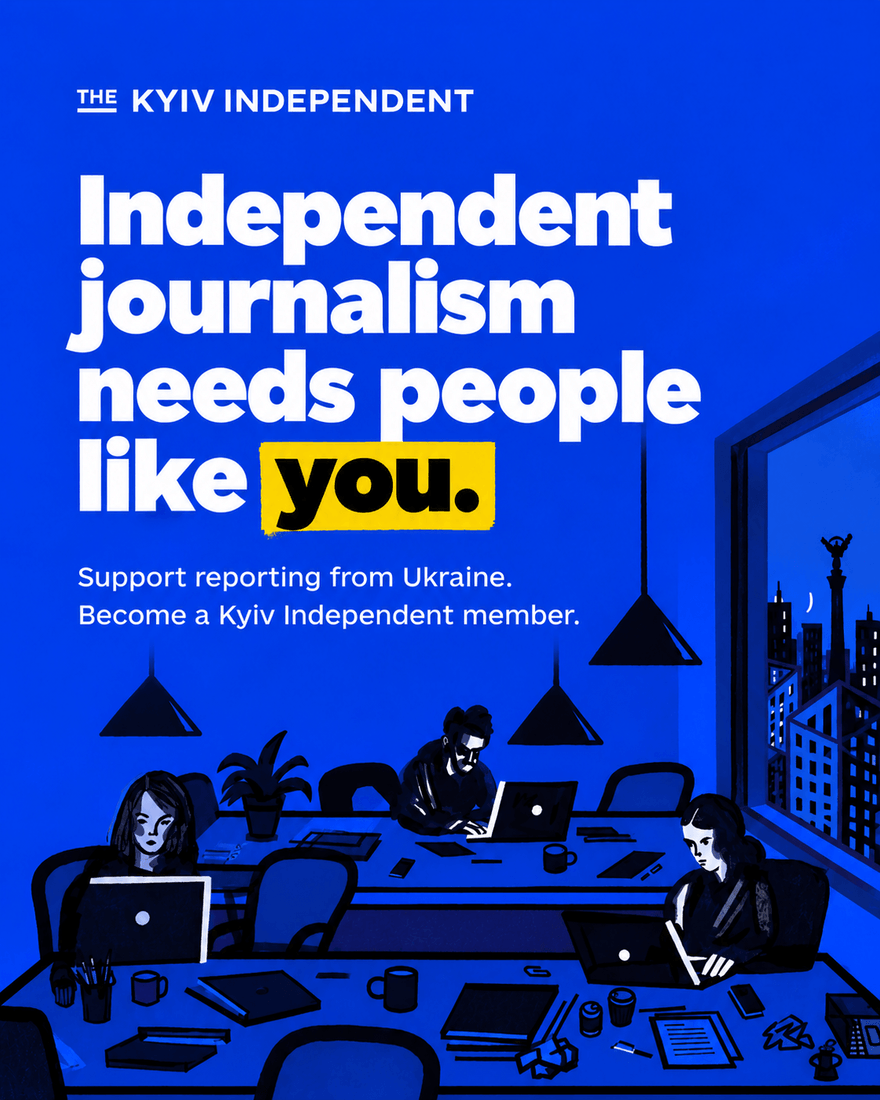
That is why the third reason Ukrainians have continued to struggle and survive is so poignant. They have highlighted that a free and independent press is critical to freedom for all. The history of the Kyiv Independent is about navigating uncertainty, staying on course, and maintaining momentum. Keep fighting, keep moving, and take others along with you — either as passengers or copilots. They started as a group of unemployed journalists in an attic, with an agenda to bring real, uninfluenced, editorially independent news to Ukrainians and the world.
At the time, I was thinking: Please let this little newspaper make it through the first year. I was so anxious. It felt like we put everything on the line, and everyone was watching us with a smirk, thinking: Oh well, we’ll see. I was telling myself: One year from now, we either win, or we will at least know that we put up a good fight.
Olga Redenko, editor-in-chief of the Kyiv Independent
Soon, the stakes went up. Three months after our humble start, just when we secured a little bit of funding and settled in a tiny attic in Kyiv that we proudly called our office, everything changed again. Russia invaded Ukraine.
That was another good moment to walk away — or rather, run. We were not prepared to be a wartime newsroom. But it was our country, our fight, and our mission. We stayed, and kept reporting.
Being a free and independent news source means not being beholden to large corporations or political party hacks. Freedom, however, costs money. Ideally, they should have paid subscribers, but in times of war, who has the resources to pay for news—even if it also provides you, as a reader, with direction, motivation, and hope? So, Kyiv Independent has ensured that their articles are free for all to read, critique, and debate. Free news lets readers stay up to date and scrutinize and criticize their politicians, public servants, and not-so-allied allies. A great democracy and an engaged society thrive on debate and compromise. We need to work together, but we can only do that if our news is truthful, verifiable and accessible.
When I was looking for a way to support Ukrainians, I decided on three methods. One is to contribute to those who chose to come to Canada. Over 304,000 Ukrainians arrived in Canada under the emergency travel program as of March 2025. I don’t blame families for escaping the horrors of Russian terror attacks on civilians in Ukraine. We make up Christmas baskets for young families who are still struggling to find work and fit into our Canadian society.
Secondly, I decided that attempting to send money to either support the war effort or provide for civilians still in Ukraine was better handled by our Canadian government, which is using our taxes to provide support and relief. Canada has committed more than $25.5 billion in overall aid to Ukraine since February 2022, including $8.5 billion in military assistance. At the May 2026 total of $25.8 billion, that works out to about $620 per person over four years. Since I pay taxes, I’ve done my part.
Third, I decided my personal contribution would be to support journalists working to bring the realities of the war and survival to the world, including stories on how well their own government is coping. The ability to trust information coming out of a war zone, from either side, is critical for outsiders to make the right decisions. In the 2026 press freedom index, the U.S. fell seven places to 64th, below Ukraine at 55th, while Canada held at 20th. Russia is 172nd. As voters and tax-paying citizens of Canada, we need to know why the fate of Ukrainians matters to us. Supporting independent journalists on the front lines who can still dispatch reports worldwide seemed a better use of my funds. Consider it an investment towards learning something useful from this senseless war.
At what risk? Freedom always has a human cost. 143 media workers have been killed since the start of the full-scale war, including 15 while carrying out their professional duties. Russia is detaining 26 Ukrainian journalists. Despite that, Ukraine has climbed 50 positions to 55th place out of 180 countries in the World Press Freedom Index since the full-scale invasion. The United States, by contrast, fell seven places to 64th.
What are the lessons of Canadians depending on another country to provide our defence, and what are the results of living next door to a dictatorship-led country that stifles freedom of the press and allows misinformation to rule their politics? We can either wait and see or watch and learn from the Ukrainians. And there is no better way than reading The Kyiv Independent. Their stories could become our stories. The Kyiv Independent has over 38,000 members in more than 100 countries, who provide about 70% of revenue, most at around $5 a month. Over 4,300 new Patreon patrons joined in the first days of the invasion.
You can read their articles and stories for free or become a paid member to help them keep publishing. The Ukrainian story is not over yet. I have included a link below so you can become a member today. I encourage you to do so—not just for Ukrainians, but for free and independent Canadians who have the presence of mind to look over our sovereign shoulders.
Sources:
- Kyiv Independent – 5 years
- GIJN – Olga Rudenko keynote
- Government of Canada – Canada–Ukraine relations
- National Defence – Feb 2026 Ukraine support
- Refdesk – $25.8B per-capita figure
- RSF 2026 Index
- WebProNews – RSF rankings
- Euromaidan Press – RSF 2026
- Censor.NET / IMI – media workers killed
- Kyiv Post – drone makers
- Library and Archives Canada – Ukrainian immigration
- UCCLF – internment
- IRCC Question Period Note – CUAET