

Canada’s Two-Track SAF Strategy: Biomass in the South, Wind and Water in the North
Canada’s path to domestic SAF production is not a single flight path. It is, logically, two separate but complementary airways that meet in the middle at the communities and the aircraft that need the fuel most.

The Southern Track — Biomass and Agriculture: Canada’s agricultural heartland is exceptionally well-positioned for HEFA and AtJ production. The Prairie provinces produce vast quantities of canola, a superior HEFA feedstock, as well as corn, wheat, and oilseed residues. Tallow from the western beef industry is another abundant lipid source. A regional HEFA plant in Saskatchewan or Alberta processing canola or waste cooking oil into SAF, combined with an AtJ facility in Manitoba or Saskatchewan converting Prairie ethanol to jet fuel, represents a near-term supply chain that could realistically fuel aviation in Winnipeg, Thompson, Saskatoon, Regina, Thunder Bay and the northern communities served from those hubs by the late 2020s. Southern-produced SAF can be shipped by rail directly to the port of Churchill, a critical military and aviation hub in Canada’s North. Or it can be produced in Churchill and shipped worldwide via its deep-sea port.
Azure Sustainable Fuels’ planned billion-litre HEFA facility, the SAF+ Consortium’s PtL work powered by Quebec hydro, and Gevo’s partnership model all fit into the southern track. Canada’s federal Clean Fuels Fund, extended to March 2030, directly supports this investment, as does alignment with ICAO’s CORSIA obligations.
The Northern Track — Wind, Water, and Nuclear: The Arctic and sub-Arctic present a fundamentally different resource endowment. There is no canola field within a thousand kilometres of Eureka (CYEU) on Ellesmere Island, and very little woody biomass north of the treeline. What the Canadian North has in extraordinary abundance is wind. The persistent Arctic and coastal winds that blow year-round with a consistency that most southern wind energy developers can only dream about, seawater, atmospheric CO₂, and in many communities, an urgent, well-established need for baseload clean power that the national grid cannot reach. The PtL pathway, powered by these indigenous northern energy resources, is precisely the right technology for the northern track. It requires no biological feedstock. Its inputs, electricity, water, and air, are available everywhere on Earth, but nowhere more reliably than in the Arctic wind corridor. The challenge, as discussed below, has been the cost and complexity of making the electrochemistry work at an economically viable scale. Two technology solutions, a Canadian startup and a category of nuclear reactor, are converging to crack that problem.
Aeon Blue: The Arctic eFuel Pioneer
Among all the technologies being developed for sustainable fuel production, one Canadian company has built its entire technology platform around precisely the conditions that prevail in Canada’s remote northern and coastal regions. Aeon Blue, based in Canada, has developed an integrated hydrogen and carbon capture technology that uses wind energy, seawater, and atmospheric CO₂ to produce cost-competitive eFuels, including SAF, without any biomass feedstock.
The heart of Eon Blue’s technology is a proprietary saltwater electrolyzer that, by design, is 100% interruptible, meaning it is engineered to operate seamlessly with the variable power output of wind and solar generation, rather than requiring the steady, uninterrupted electricity that conventional electrolyzers demand. This is a critical distinction. Standard Proton Exchange Membrane (PEM) electrolyzers used in most PtL projects suffer efficiency losses and material degradation when subjected to the power fluctuations inherent in wind and solar generation. Aeon Blue’s reactor is designed from the ground up to embrace intermittency rather than fight it, integrating green hydrogen production and direct air capture of CO₂ into a single process step, thereby producing the two ingredients needed for Fischer-Tropsch syngas while using surplus atmospheric CO₂ for storage in every cycle.
The environmental performance of this process is promising. Aeon Blue claims that their process captures and stores up to 600% more CO₂ than what goes into the fuel itself. This means their eFuel is not merely carbon-neutral in the lifecycle sense; it is actively carbon-negative in its net atmospheric impact. As Arctic permafrost thaws at accelerating rates, ancient organic carbon decomposes, releasing CO₂ and methane that have been locked away for millennia, creating a feedback loop that makes atmospheric drawdown technologies increasingly urgent.
The strategic fit for Canada’s Arctic is almost perfectly matched. Communities like those served by CYZS (Coral Harbour), CYHI (Ulukhaktok), and CYCO (Kugluktuk) sit on or near coastlines exposed to powerful and consistent winds. They have access to seawater or substantial bodies of fresh water. Their energy situation is perilous by any measure, with fuel costs that strain communities and force them to rely on government funding year after year. An Aeon Blue production unit co-located with a community’s wind energy installation could simultaneously reduce the community’s diesel dependency for electricity generation and produce the SAF and diesel fuel that the aviation lifeline into that community currently imports from thousands of kilometres away. For the first time, a genuinely Arctic-appropriate eFuel technology exists that requires no southern supply chain, only the wind, the sea, and the sky.
The Nuclear Connection: Why Modular Reactors Complete the Picture
Wind and solar alone, even with Aeon Blue’s “interruptibility” advantage, have a fundamental limitation in the High Arctic: the polar night. At CYEU (Eureka, Nunavut, 80°N), the sun does not rise for months. Even at CYFB (Iqaluit, 63°N) and CYCB (Cambridge Bay, 69°N), winter solar generation approaches zero for extended periods, and wind, while generally consistent, is not dispatchable on demand. For a community that needs both reliable electrical power and year-round fuel production, there must be a baseload backstop. In the Arctic, that backstop is nuclear.
Here is the central problem with Power-to-Liquid SAF at scale: it requires enormous amounts of energy. To produce a single kilogram of synthetic jet fuel via electrolysis-plus-Fischer-Tropsch, you need roughly 22–25 kilowatt-hours of electrical energy. Producing one million litres of PtL SAF, a modest regional supply that would barely cover one busy airport’s seasonal consumption, requires sustained, around-the-clock generation equivalent to that of a medium-sized power station running continuously. Intermittent renewables cannot provide this alone in the Arctic winter. You cannot turn Fischer-Tropsch reactors on and off with the season.
This is why nuclear energy, specifically modular Small Modular Reactors (SMRs) based on molten salt or salt-cooled reactor designs, is not a supplement to the wind-and-water SAF strategy. It is its backbone.
How Molten Salt Reactors Work
A Molten Salt Reactor (MSR) is a nuclear fission reactor in which the fuel and/or the primary coolant is a mixture of molten fluoride or chloride salts rather than water or helium. MSRs eliminate the nuclear meltdown scenario present in water-cooled reactors because the fuel mixture is already molten; the fuel cannot “melt down” into something it already is. In the event of an emergency, passive freeze-plug systems automatically drain the fuel salt into passively cooled tanks by gravity alone, with no operator action required. Molten salt coolants have an exceptional heat-absorbing capacity, enabling MSRs to operate at the very high temperatures required to produce high-grade process heat for industrial applications, including hydrogen production at 600–900°C.
In Canada, a molten salt-based SMR concept passed a crucial pre-licensing vendor design review in 2023, the first such review completed anywhere in the world. The company that achieved this milestone is Terrestrial Energy, based in Oakville, Ontario, whose Integral Molten Salt Reactor (IMSR) is now the most advanced MSR design for licensing in the Western world. Moltex Energy, based in Fredericton, New Brunswick, has reached a similar pre-licensing stage with New Brunswick Power at Point Lepreau, backed by a C$50.5 million investment from the Canadian government announced in 2021. Commercial MSR deployment in Canada is realistic from the mid-2030s onward, a timeline that aligns precisely with the window in which northern SAF production infrastructure needs to be built.
How a Nuclear SMR Powers a Northern SAF Plant
The integration of an SMR with a wind-powered eFuel facility like Aeon Blue’s technology operates through two powerful, synergistic channels.
Channel One — Year-Round Hydrogen Production via High-Temperature Electrolysis: Conventional electrolysis using grid electricity achieves efficiencies of about 65–70%. High-temperature solid oxide electrolysis (SOEC), which performs water splitting at 700–850°C, achieves efficiencies of 85–90% because much of the energy is supplied as heat rather than electricity. An MSR operating at 700°C or higher simultaneously supplies heat and electricity to the electrolyzer, potentially achieving hydrogen production costs below $2/kg — approaching price parity with hydrogen produced from natural gas. When the wind is blowing, Aeon Blue’s saltwater electrolyzer handles production. When the polar night or a calm period reduces wind output, the MSR seamlessly carries the load, maintaining continuous hydrogen and syngas production throughout the Arctic winter.
Channel Two — Community Power and Industrial Process Heat: The Fischer-Tropsch reactors that convert syngas to jet fuel require a sustained thermal environment to operate efficiently. An MSR co-located with a northern SAF plant provides this process heat at high grade and at essentially zero marginal cost per additional BTU, eliminating the fossil-fuel-fired heaters that would otherwise compromise the fuel’s lifecycle carbon credentials. Crucially, the same reactor simultaneously supplies baseload electrical power to the host community — replacing the diesel generators that currently consume 90 million litres of diesel annually across Canada’s remote North. Economics improve for both the community and the fuel plant: the reactor’s capital cost is shared across two revenue-generating applications rather than one.
The Modular Advantage for Northern Deployment
The “modular” aspect of SMR design is the engineering characteristic that makes all of this genuinely practical in remote northern locations rather than theoretically attractive. A traditional large nuclear power station is a multi-billion-dollar, decades-long project suited only to densely populated regions with large electrical grids. A modular SMR, such as the Terrestrial IMSR, is designed as a factory-built, transportable unit whose major components are manufactured in a controlled facility and shipped to the deployment site by sea. The same sealift logistics that currently deliver diesel to Arctic communities each summer can deliver SMR components. Once installed, the reactor eliminates the sealift dependency entirely — and produces both power and fuel locally for decades.
Imagine Cambridge Bay (CYCB), strategically positioned at the crossroads of the Northwest Passage, hosting an Aeon Blue wind-powered eFuel production unit supplemented by a Terrestrial IMSR. During the open water season and whenever Arctic winds blow, which is most of the time, the wind array and Aeon Blue’s saltwater electrolyzer produce hydrogen and capture CO₂ from the sea and the air. During the polar night and calm periods, the IMSR continues to operate. INERATEC’s modular Fischer-Tropsch units convert the syngas to synthetic kerosene year-round. The community’s electrical grid is powered cleanly throughout. The SAF produced at Cambridge Bay is available to every PT6A-powered aircraft — Twin Otters, Caravans, King Airs — operating in the central Arctic, significantly reducing annual sealift fuel costs and the associated environmental liability. A portion of the fuel could even be distributed to other Arctic communities, helping establish a northern SAF supply network that the south currently cannot reach.
SAF Production in Canada — The Integrated Opportunity
Canada’s federal government has recognized the SAF opportunity through its Clean Fuels Fund, which, in Budget 2024, was extended to March 2030 and supports capital investment in clean fuel production and helps de-risk early commercial-scale projects. The SAF+ Consortium in Montreal has already demonstrated PtL production at pilot scale using Hydro-Québec’s hydroelectric power, a model applicable to other provinces with renewable electricity surpluses. Quebec’s hydroelectric surplus is one of the cheapest sources of renewable electricity on the continent, making green hydrogen production via electrolysis economically tractable there in a way it is not in most other jurisdictions. It could power southern PtL production while northern wind-and-nuclear plants serve the Arctic.
Azure Sustainable Fuels’ planned billion-litre HEFA facility targeting first production in 2027 represents the large-scale conventional biofuel backbone of the southern track. Together with SAF+ in Quebec, Gevo’s AtJ partnership potential on the Prairies, and Carbon Engineering’s direct air capture technology in British Columbia, Canada, is moving toward a genuinely diversified domestic SAF industry, one that spans biofuel, synthetic, and electro-fuel pathways across the country’s distinct regional resource endowments. The practical goal: by 2030, a northern operator at Iqaluit (CYFB) or Goose Bay (CYYR) should be able to purchase certified SAF produced in Canada at a price approaching that of conventional Jet-A, with a lifecycle carbon score that meets CORSIA eligibility requirements.
Setting Up a SAF Plant: What It Would Take
For those considering establishing a SAF production facility, whether as a commercial-scale southern plant or a forward-integrated northern operation combined with a community energy project, the following considerations apply.
HEFA Facility (Near-Term, Southern Canada): A regional HEFA plant processing canola oil, waste cooking oil, or tallow into SAF represents the lowest-risk, shortest-timeline entry point. A facility producing 10–50 million litres per year is technically achievable at a capital investment of CAD $150–400 million, depending on scale. The primary regulatory pathway runs through Transport Canada’s Clean Fuels Regulations and the ASTM D7566 certification framework. Prairie feedstock supply contracts and provincial carbon credit frameworks are key deal-structuring elements.
AtJ Facility (Medium-Term, Prairie-Focused): A plant in Saskatchewan or Manitoba converting agricultural ethanol to jet fuel leverages existing grain infrastructure. Gevo’s technology is the most commercially advanced in this category, and the company actively seeks partnership arrangements with new-market entrants.
Wind and Aeon Blue eFuel Facility (Northern Canada, Coastal or Arctic): An Aeon Blue saltwater electrolyzer installation paired with a INERATEC FT conversion module, powered by Arctic or coastal wind and supplemented by community-scale renewable storage, is the right near-term technology package for remote northern communities with good wind exposure and coastal access. Capital costs scale with the production target, but the modular nature of both the electrolyzer and the FT units allows phased investment, starting with a community-scale pilot before expanding to a regional fuel supply.
Integrated Wind and Nuclear and eFuel Facility (Northern Canada, Long-Term): The most strategically compelling option for the High Arctic, requiring the convergence of: an Aeon Blue or equivalent saltwater electrolysis system, available SMR deployment (realistic from 2030–2035 for early commercial units), and modular FT conversion. Terrestrial Energy’s IMSR provides the nuclear energy backbone, INERATEC’s modular FT units provide the conversion, and Aeon Blue’s technology provides the interruptible renewable electrolyzer and CO₂ capture front-end. The combination, assembled by a project developer with the vision to integrate all three and the relationships to navigate the requirements of northern communities and Indigenous partnerships, represents one of the most distinctive and high-value Canadian industrial propositions of this decade.
The Road Ahead: A Timeline
The SAF transition in aviation is not a theoretical future event; it is an unfolding present reality. U.S. SAF production capacity reached approximately 30,000 barrels per day in early 2025 and is forecast to more than double between 2024 and 2025. The EU and UK SAF mandates that came into force in January 2025 are already creating structural demand that HEFA, constrained by feedstock availability, cannot satisfy alone, accelerating investment in FT-SPK and PtL pathways globally. For turbine-powered aircraft operating in the Canadian Arctic, in Africa, in Southeast Asia, or anywhere else where SAF supply chains are thin, the practical near-term option is a 30–50% SAF blend in conventional Jet-A, approved, safe, and available from distributors working with Neste, World Energy, or emerging Canadian producers today.
Over the next decade, as SMR deployments begin, as Aeon Blue and similar technologies scale from pilot to commercial, and as PtL capacity comes online in the North, the prospect of 100% SAF operation at Gjoa Haven or Sachs Harbour, burning fuel whose carbon was captured from Arctic air and whose energy came from Arctic wind and a compact reactor built in a factory in southern Ontario, moves from visionary to operational reality.
The roughly $300–400 million that governments currently spend annually to subsidize diesel transport to remote communities is not a permanent feature of Canada’s energy landscape. It is a problem awaiting a solution that is now within technical reach. Every litre of locally produced eFuel that replaces an imported barrel of Arctic Jet-A or diesel is money that stays in the community, carbon that stays out of the atmosphere. When combined with the implementation of a Molten Salt Reactor (MSR), the amount of “imported” fuel is significantly reduced.
A 2023 RAND Corporation report concluded that “the Canadian Arctic is sparsely populated and poorly maintained outside Nunavut’s capital, Iqaluit,” and that Ottawa’s deficient presence is reflected through isolated, eroding infrastructure, inadequate support for Indigenous peoples and northerners, and limited socioeconomic prospects. That assessment, from an American strategic research organization, is both an honest appraisal and a warning: a sovereignty claim that rests on communities experiencing energy poverty, food insecurity, crumbling infrastructure, and the chronic sense that Ottawa is thousands of kilometres away and largely indifferent is a fragile sovereignty claim. Realizing Canada’s Arctic policy will require a whole-of-society approach that reflects the inherent, interwoven geopolitical, socioeconomic, security, and cultural factors, including investments in airports, hospitals, and schools that raise residents’ quality of life and reduce logistics costs.
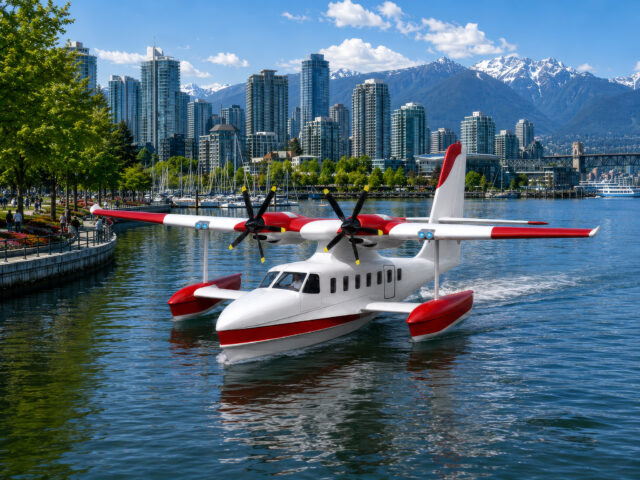
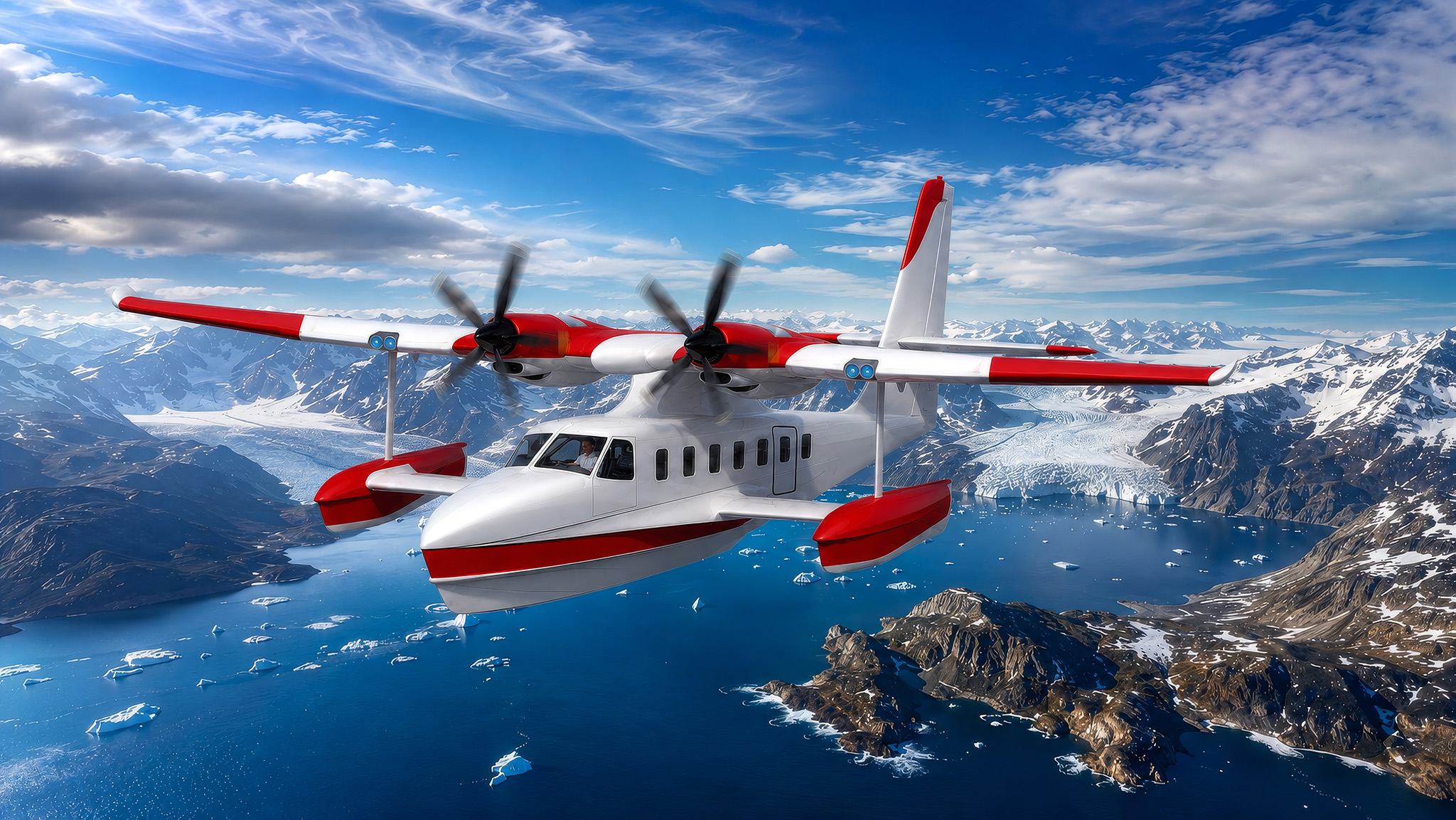
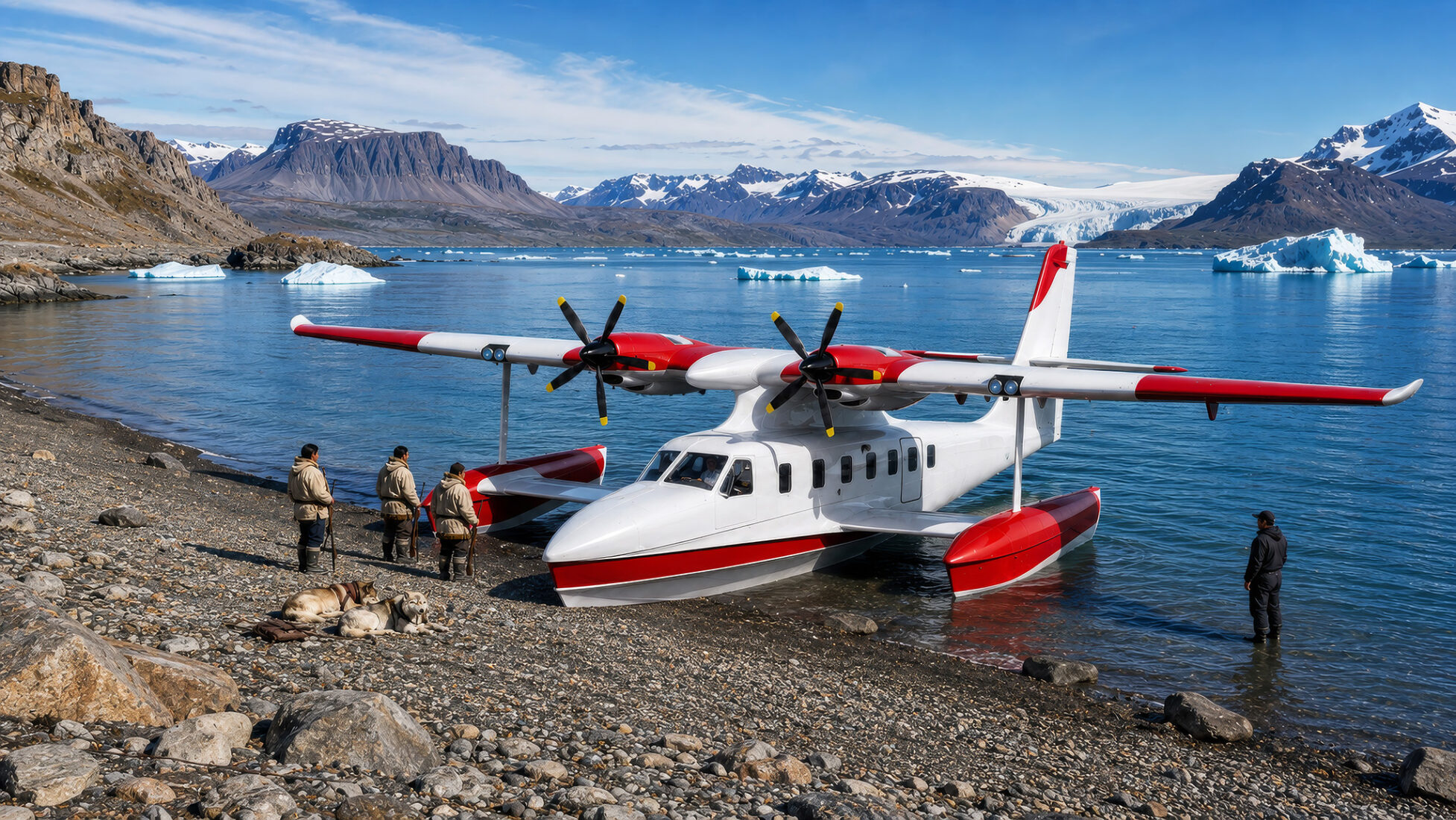
When remote Arctic communities gain genuine economic self-sufficiency, they gain the agency to shape the future of their own North. Next, they need an upgraded transportation system that not only supplies but also supports each of these communities cost-effectively. Entrepreneurs are currently developing new generations of technologically advanced amphibious aircraft that would connect communities and remote regions of our North like never before. Canada’s most durable claim to Arctic sovereignty lies not in military posture alone, but in the vitality and self-sufficiency of the communities that actually live there. That is where the new generation of amphibious aircraft comes into its own as part of the “right mix”.
Considering that all communities in the North are located on Arctic shores or inland lakes, seaplanes can access thousands of lakes, rivers, and coastal sites that remain completely beyond the reach of fixed-wing aircraft or ground transport throughout the Arctic summer. Amphibious seaplanes, under the right conditions, can go anywhere there is water, and in the Arctic summer, open water, from coastal shores to inland lakes and newly ice-free channels, provides an extraordinary network of natural landing sites that no road or rail system could ever replicate.
Winter operations in the high Arctic remain the frontier challenge for this new generation of aircraft, with the incorporation of cold-weather electronics, hydraulics and landing gear critical to extending operational seasons beyond the summer months.
The flying boat, for all its romantic heritage as a machine of the frontier, is well-positioned to be a machine of the sustainable future. The PT6A, refined over six decades and 400 million flight hours, is already SAF-ready. The Arctic wind blows constantly. The sea is everywhere. The technology to convert both into clean fuel and clean energy for the world’s most remote aviation operations now exists. What remains is the decision to build it. Canada, with its nuclear expertise, its aerospace legacy, its Prairie biomass, its coastal wind, and its urgent northern communities, has every reason and every resource to lead.
Note: This paper outlines a strategic capability concept for discussion purposes. Advancement to program development would require a structured, in-depth Feasibility Study that encompasses logistical and operational modelling, infrastructure requirements, certification pathways, and comprehensive financial analysis.
John Goulet is the principal of Goulet Aviation Services. With 45 years of international experience in helicopter, executive jet, and amphibious seaplane operations across 20 countries, he writes and consults on sustainable aviation, remote community connectivity, and the economics of frontier aviation.
*” Amphibious Seaplane” appears as a redundant term, but some seaplanes do not have retractable landing gear. The newly designed amphibious aircraft I refer to are flying boats with retractable landing gear or simply “amphibious aircraft.”
Key Sources & Further Reading:
- Aeon Blue eFuel Technology: aeonblue.ca
- IATA SAF Programme: iata.org/en/programs/sustainability/sustainable-aviation-fuels
- Pratt & Whitney Canada Alternative Fuels: prattwhitney.com/en/sustainability/cleaner-fuel
- SAF+ Consortium (Canada): safplusconsortium.com
- Terrestrial Energy IMSR: terrestrialenergy.com
- Azure Sustainable Fuels: azuresustainablefuels.com
- IAEA Molten Salt Reactor Technology: iaea.org
- NREL SAF State-of-Industry Report 2024: nrel.gov/publications
- Pembina Institute — Diesel Dependency in Remote Communities: pembina.org
- NWT Fuel Prices: inf.gov.nt.ca/en/services/fuel-services/prices
- Rand: Actionable Options Exist for Canada to Enhance Its Arctic Sovereignty