

The Ocean 18 as a Canadian Coast Guard Platform
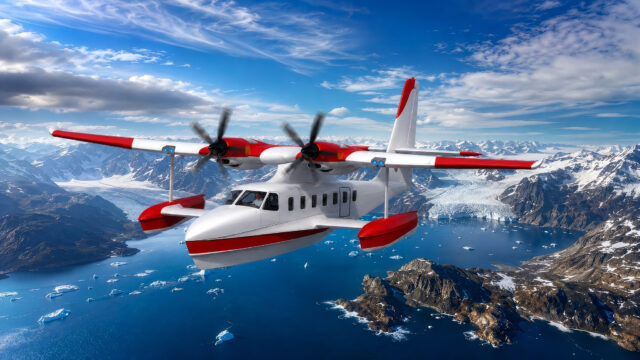
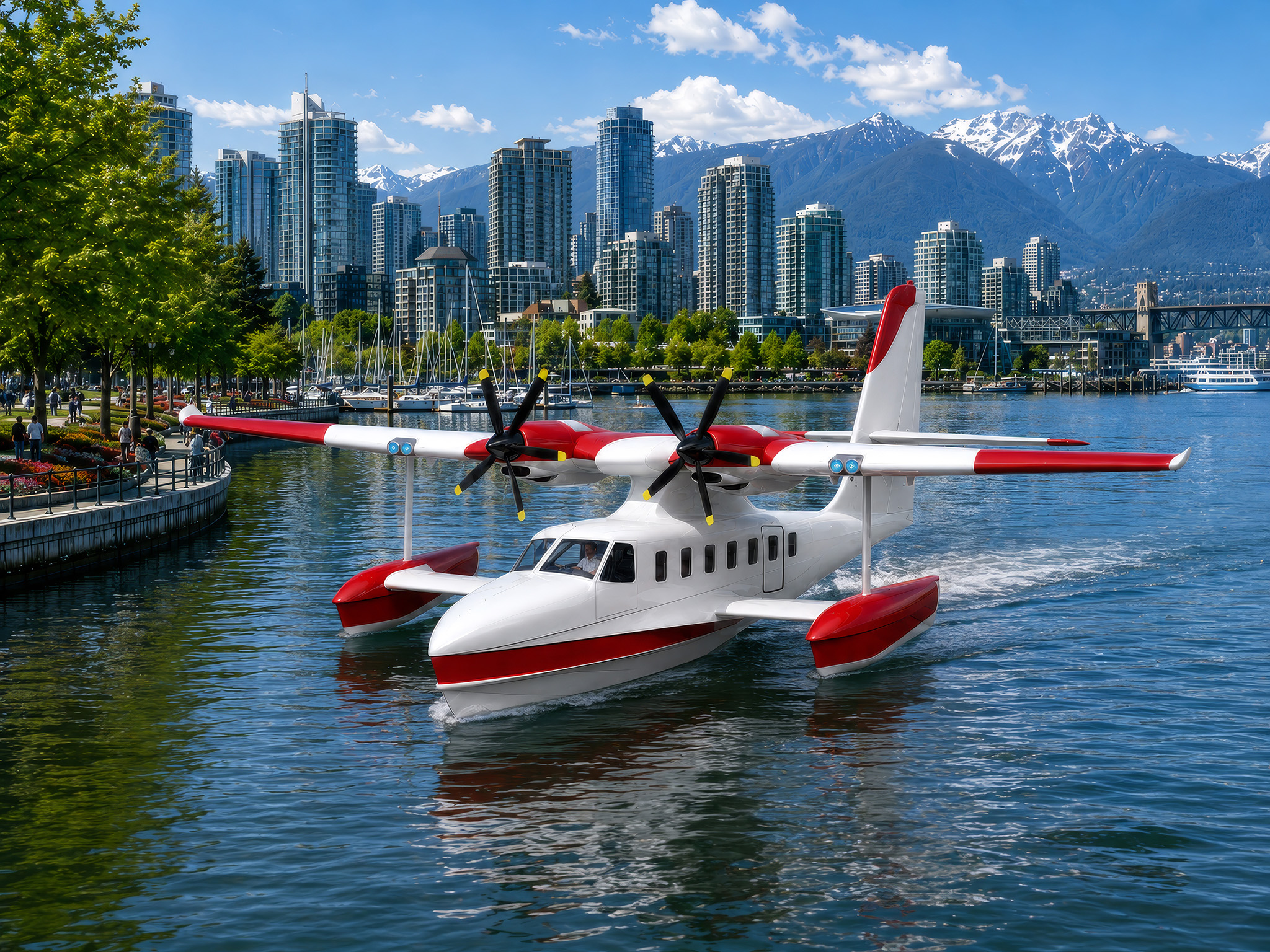
Ocean Aircraft describes the Ocean 18 as a twin-engine aircraft intended for approximately 10 to 21 occupants and for roles now served by Twin Otter-class utility aircraft. The Ocean 12 and Ocean 18 are intended to share much of the same basic airframe. That commonality could reduce manufacturing complexity, simplify training and allow a Canadian production system to serve both single- and twin-engine markets. For Canadian Coast Guard purposes, the Ocean 18 is the more immediate focus.
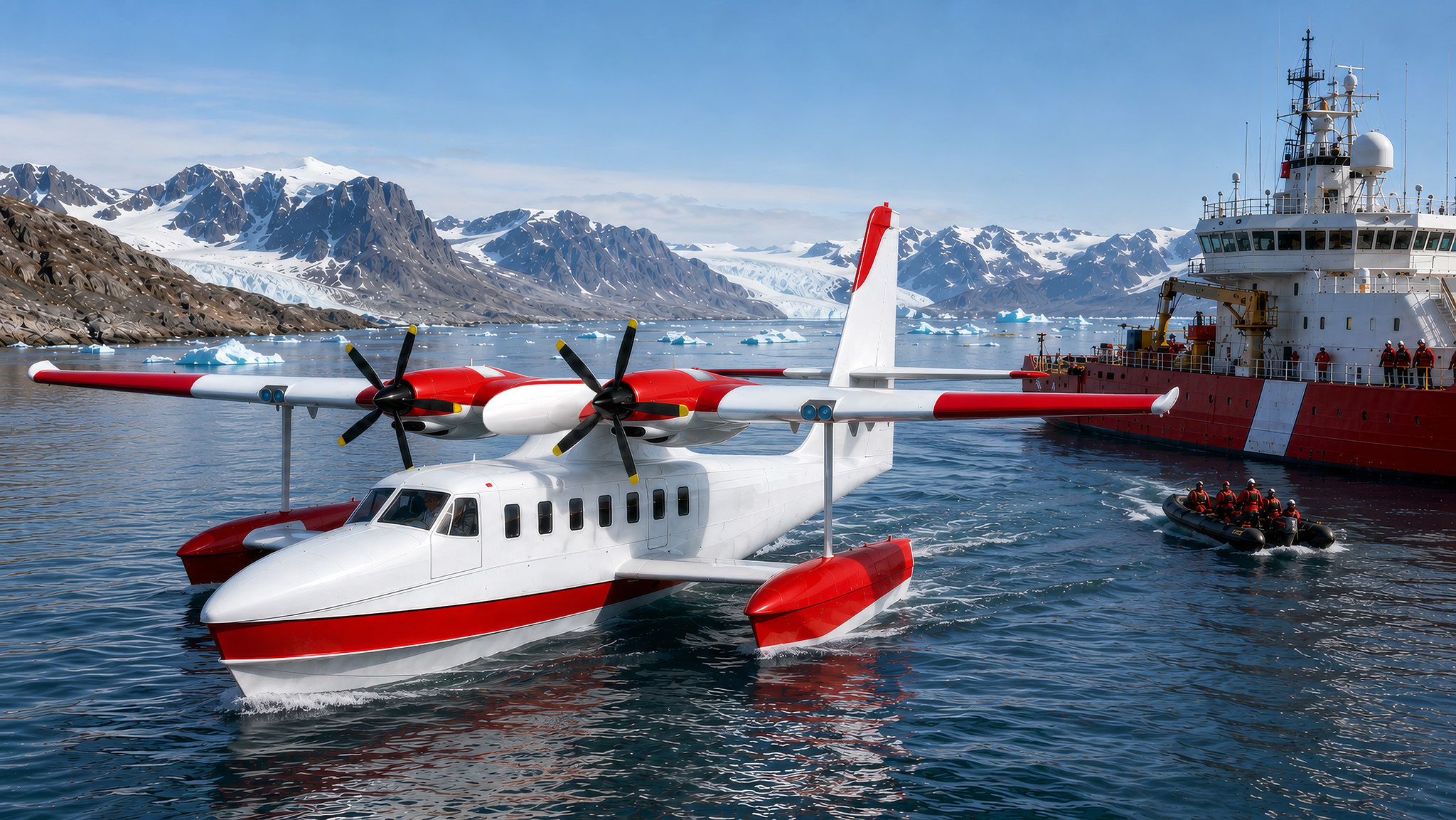
A twin-engine Ocean 18 could support coastal search and rescue, pollution-response observation, environmental and security monitoring, fisheries and vessel surveillance, personnel transport, medical evacuation, disaster response, cargo delivery and service to remote communities. The aircraft’s principal advantage would not be that it performs every mission better than a helicopter, patrol aircraft or vessel. Its advantage would be the ability to combine meaningful range and payload with direct access to water-landing locations, including operational flights to remotely located coastguard and military vessels.
A helicopter can hover and perform vertical rescue, but it cannot land on water and is costly to acquire and operate. Conventional patrol aircraft may offer greater speed or sensor capacity, but they require runways and cannot operate directly beside marine vessels. A marine vessel can remain on scene for extended periods, but it cannot match an aircraft’s speed. The Ocean 18 would fill the operational gap between them.
It could reach a remote location quickly, land on water where conditions permit, carry personnel or equipment, and return without requiring a paved airport. That versatility is particularly valuable in Canada, where sovereignty, public service and economic development extend across enormous coastal, northern and Arctic regions.
Why Amphibious Aircraft Require a Conservative First Powerplant
The word “conservative” should not be confused with timid. In aircraft development, a conservative first powerplant is the engine that allows the manufacturer to take risks on genuinely innovative aircraft while avoiding unnecessary risk in every subsystem.
The Ocean 18 already proposes a new hull, unusual hydrodynamic behaviour, folding wings, an electric water-thruster system and a new manufacturing program. The project does not become more innovative by adding an immature primary propulsion system before the basic aircraft has flown. A government amphibian operating in the high Arctic must also accommodate highly variable missions.
One flight may require prolonged slow-speed surveillance. Another may require a rapid response at high cruise power. A third may involve operating at maximum practical weight with sensors, survival equipment, medical equipment, personnel or cargo. The aircraft may encounter strong winds, icing, low temperatures, repeated approaches, and a water landing, which may become unavailable due to weather changes. Energy reserve cannot exist only in a computer model. It must remain after extended taxiing, holding, weather deviations, a missed approach or the discovery that the planned water site is unsafe.
Liquid fuel remains valuable because it offers high energy density, rapid replenishment and an established logistics system. A turbine aircraft can be refuelled and returned to service in locations where installing large electrical charging systems would be difficult, costly, or impossible. The environmental assessment must also look beyond the engine exhaust.
An amphibious aircraft can use existing waterways rather than requiring a new paved runway, extensive land clearing, access roads and secondary ground transportation. It can fly directly to a coastal community, vessel or harbour rather than landing far inland and transferring passengers or equipment by road. A PT6-powered amphibian using increasing quantities of lower-carbon fuel may therefore provide infrastructure and total-journey benefits before fully electric flight becomes practical.
Designing for Tomorrow Without Delaying Today
The first Ocean 18 should use a proven powerplant, but the airframe should not be designed as though propulsion technology will never change. Future flexibility must be built into the aircraft at the preliminary-design stage. The nacelle and wing structure should allow reasonable changes in engine mass, mounts, cooling and system routing. Electrical generation should be expandable. Systems bays should remain accessible. High-voltage routing and thermal-management provisions should be considered before the aircraft structure is frozen.
Environmental-control, de-icing and hydraulic systems should not be so dependent upon turbine bleed air that future electrification becomes prohibitively difficult. Battery installation requires careful structural planning. Batteries do not become lighter as energy is consumed. Their mass remains aboard throughout the flight. Their location must therefore be compatible with center-of-gravity limits, crash loads, cooling, water ingress protection, and emergency access.
Hydrogen presents a different problem. It offers favourable energy by mass but requires much greater storage volume. Tank position, ventilation, structural protection and refuelling infrastructure could reshape the aircraft. A future propulsion conversion will still require considerable engineering and certification. The realistic promise is not that turbines can later be removed and batteries fitted over a weekend.
The realistic promise is that the initial airframe will not create avoidable barriers to future change.
Certification First, Decarbonization in Planned Blocks
The Ocean Aircraft program should progress through planned production standards. The first aircraft would use PT6 engines and a proven propeller system. The manufacturer could focus on the type certificate, hull behaviour, flight characteristics, amphibious systems, structural substantiation, production conformity and operator support. Later versions could incorporate increased electrical generation, additional electrical accessories, improved energy monitoring, and battery-assisted non-propulsive systems. A later demonstrator could examine parallel or series-hybrid propulsion once the technology, certification basis and business case are sufficiently mature.
A still later aircraft might use hydrogen fuel cells or fully electric propulsion if energy storage and infrastructure reach the required level. This sequence allows each technology to be judged by what it can actually deliver. It also allows the first series of aircraft to earn revenue while the next propulsion system is still being developed.
Why Winnipeg Is the Logical Location
Winnipeg already possesses many of the ingredients required for both amphibious aircraft manufacturing and PT6 support. Manitoba Aerospace describes the province as Canada’s third-largest aerospace industry. The sector includes design, manufacturing, testing, certification, composites, turbine engine work, research, advanced manufacturing, and a network of specialized small and medium-sized businesses.
The province also has one of the world’s largest independent gas turbine overhaul companies and advanced engine testing facilities associated with major international manufacturers. This matters because a PT6 center should not be viewed in isolation. It would sit within an established aerospace cluster with experienced engineers, machinists, non-destructive testing specialists, quality personnel, supply chain companies, training institutions, and aviation operators.
Winnipeg is also geographically well positioned. It can serve Manitoba, Saskatchewan, Alberta, Northwestern Ontario and northern operators while retaining access to national and international freight networks. For a new Ocean aircraft manufacturing program, placing propulsion support near engineering and assembly activity would improve communication between design engineers and the technicians who eventually maintain the engines. The engine overhaul and service shop would understand the aircraft installation from the beginning.
The aircraft manufacturer would have access to practical expertise in engine mounts, inlet design, vibration, exhaust routing, oil systems, propeller matching, engine condition monitoring, and field support. The two initiatives would strengthen one another.
What “Full-Service” Must Mean
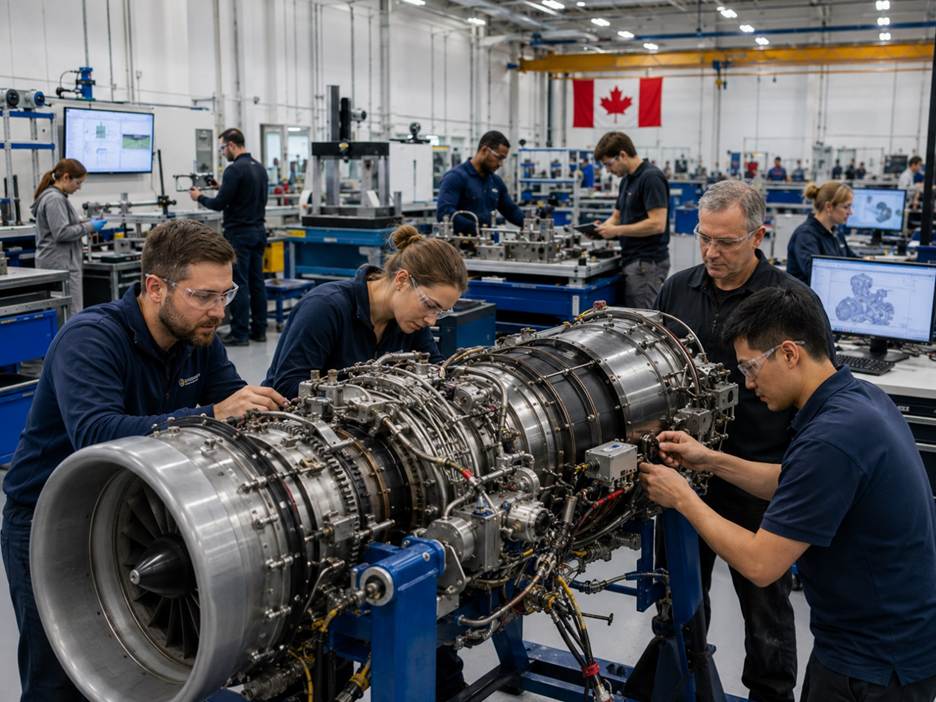
The term “full-service PT6 center” should not be used lightly. A facility that performs only line maintenance, borescope inspections, or accessory replacement would be useful, but it would not close the regional overhaul gap. A full-service center should ultimately be able to receive an engine, disassemble it, clean and inspect its components, conduct dimensional and non-destructive testing, repair or replace approved parts, balance rotating assemblies, rebuild the engine, complete test-cell runs and issue the appropriate maintenance release.
A full-service center should also provide hot-section inspections, module work, troubleshooting, mobile field service, accessory coordination, engine condition monitoring, rental engine support, warranty administration, and an exchange engine pool. The center should be designed around aircraft availability, not merely workshop activity. An operator may value a replacement engine delivered quickly more than a slightly cheaper overhaul that leaves an aircraft grounded for months.
Regulatory terminology also matters. An engine is not normally “recertified” as a new engine type during overhaul. Its type certification remains in place. The approved maintenance organization overhauls the individual engine in accordance with approved data and releases it to service with the required documentation. The Winnipeg project would require appropriate Transport Canada approvals, technical data, calibrated tooling, qualified staff, parts traceability, environmental controls, a quality system and a suitable engine test cell. OEM affiliation would be highly desirable because it could improve access to proprietary repairs, training, technical information, warranties, parts and customer referrals.
The feasibility study should nevertheless examine more than one model. The center could become an OEM-designated facility, a joint venture with an established MRO organization, or an independent approved facility operating within the technical and commercial rights available to it.
Why Aerospace Manufacturing and Maintenance Go Hand in Hand
The City of Winnipeg’s Sky Economy Employment Zone connects the concept of bringing aircraft manufacturing and PT6 maintenance to the Mayor’s Office, Manitoba’s aerospace community and federal Defence Industrial Strategy funding. The project concept supports a world-class PT6 Centre of Excellence that provides overhaul, repair, testing, technical training, and workforce development across domestic and international aviation markets, and it also lends itself perfectly to amphibious aircraft manufacturing.
The preliminary capital estimate for the standalone PT6 facility, C$50 million to C$150 million or more, is intentionally broad. That figure could be reasonable for a greenfield center with extensive engine-family coverage, a new test complex, large parts and exchange-engine inventories, training infrastructure and substantial future expansion capacity. It is not yet a business-case estimate. The staged model in this article is narrower. It assumes that Winnipeg could begin with field service, inspection, hot-section capability, module work, engine logistics and an exchange pool before adding complete overhaul and test-cell capacity. The two estimates are therefore not necessarily contradictory.
The investment figure is a broad outer envelope. The phased model is a possible route to reach the market with less initial capital. The feasibility study should determine where the real project belongs between them.
A Preliminary Economic Impact Assessment
The present figures should be treated as hypotheses to be tested, not forecasts to be promoted as established fact. A detailed economic-impact assessment must begin with a census of PT6 engines across Western and Northern Canada. It should identify engine variants, annual utilization, expected shop-visit dates, current overhaul destinations, freight costs, turnaround times and operator interest in exchange engines or hourly maintenance programs. It must also obtain current quotations for buildings, tooling, test equipment, technical data, training, inventory, insurance, environmental approvals and working capital.
Subject to that work, a staged project could develop as follows. The initial phase could focus on field service, borescope inspections, hot-section work, module repair, engine logistics, and an engine exchange pool.
A second phase could add full overhaul capability and an appropriate test cell. Depending upon whether existing buildings and test infrastructure can be adapted, cumulative investment could rise to approximately C$40 million to C$65 million. Direct employment could grow to between 90 and 140 positions. A larger greenfield development incorporating extensive training, engineering, broad PT6-family coverage, and substantial exchange inventory could move the project’s submission toward the C$50 million to C$150 million-plus envelope. A mature center might eventually employ approximately 120 to 180 people directly.
Using an illustrative fully loaded employment cost of C$105,000 to C$130,000 per position, direct annual payroll and benefits could reach approximately C$13 million to C$23 million. The center would also purchase machining, coatings, calibration, industrial gases, freight, engineering, construction, information technology, security, training and environmental services. Depending upon local sourcing, annual regional procurement might fall within a broad planning range of C$8 million to C$20 million.
Using a preliminary assumption of approximately 0.5 to 0.8 indirect and induced positions for every direct position, the mature operation might support a combined 180 to 320 jobs. Revenue would depend upon the mix of full overhauls, hot-section inspections, module repairs, accessories, field service, engine leasing and long-term support agreements. A center completing perhaps 35 to 55 full overhauls annually, together with a larger volume of inspections, repairs and field events, might ultimately generate C$45 million to C$85 million in annual revenue.
Every one of these figures requires verification. That is precisely why the next public investment should fund the economic and impact feasibility study rather than waiting for something to happen.
The Correct Federal Funding Request
The immediate request to government should not be a blank cheque to construct an overhaul center or launch an aircraft factory. It should fund two linked, decision-grade studies.
The first would determine the feasibility of manufacturing, certifying and supporting the Ocean 18 in Canada for Coast Guard, northern, commercial and export missions. It would include mission requirements, aircraft configuration, engine and propeller selection, Canadianization of the UK design, certification planning, production-site analysis, intellectual property arrangements, supply chain development, and through-life support.
The second would determine the commercial and economic feasibility of a full-service Winnipeg PT6 center. It would include the western engine census, operator commitments, MRO competition, OEM engagement, regulatory approvals, capital costs, test-cell requirements, workforce planning, site selection, environmental review, revenues, financing and economic impact.
A combined Phase 0 program would likely require a planning allowance of C$1.5 million to C$2.5 million over approximately 12 to 18 months. That amount is itself preliminary, but it is sufficiently specific to define a serious funding request. The work should be independently reviewed and should produce clear decision gates. Government agencies would then know whether to proceed, revise the scope, seek an industry partner, or stop before committing major capital. That is responsible industrial development.
Why the Defence Industrial Strategy Fits
Canada’s Defence Industrial Strategy appears to be written for projects of this kind. It identifies aerospace platforms and air in-service support as sovereign capabilities. The Ocean 18 would be an aerospace platform with a defence-minded objective. The PT6 center would be in-service support.
The strategy’s Build–Partner–Buy framework is equally relevant. Canada could build the aircraft and sustainment capability in Manitoba, partner with Ocean Aircraft in the United Kingdom on the design, work with Pratt & Whitney Canada or another approved service partner for technical support, and purchase specialized components where domestic production is not practical.
The strategy also emphasizes Canadian intellectual property, domestic industrial capacity, small and medium-sized businesses, workforce development, regional participation and exports. The Coast Guard (and/or Air Force) connection is particularly important because eligible Canadian Coast Guard procurements fall within the Industrial and Technological Benefits framework. A Canadian-built Coast Guard amphibian, supported by a Canadian engine-overhaul center, could therefore generate benefits that extend well beyond the initial aircraft purchase.
The federal strategy also creates possible funding pathways. These include the Regional Defence Investment Initiative, the Business Development Bank of Canada’s Defence Platform, the Defence Industry Assist stream of NRC-IRAP, workforce program and future strategic investments associated with the Defence Investment Agency. None of these programs guarantee support. The point is that the proposed feasibility studies align with stated policy rather than requiring government to invent a new rationale.
Manitoba’s Existing Aerospace Base Reduces the Risk
The proposed project begins in a province with existing aerospace experience. Manitoba already has advanced capabilities in manufacturing, composites, MRO, testing, certification, and workforce development. The province’s aerospace sector supplies customers internationally and includes major companies as well as specialized smaller firms. That existing base reduces execution risk.
A PT6 center would still require substantial investment, approvals and recruitment. An Ocean assembly program would still require certification expertise, production engineering and capital. However, neither project would be trying to create an aerospace cluster from nothing. The Winnipeg Airport Employment Zone could provide proximity to runways, freight, existing aerospace firms, technical colleges, operators and potential test facilities. It could also become a visible center for northern and defence-related aviation support.
Supporting Sovereignty Through Dual-Use Capability
The strongest case for these projects is not that they are exclusively military or exclusively commercial. They are dual-use capabilities. A PT6 overhaul center would support civil medevac, charter, cargo, agricultural, and northern operators, as well as government and defence-adjacent aircraft. The Ocean 18 could serve Coast Guard, Air Force, environmental, security, medical, disaster-response and remote-community missions while also supporting commercial passenger, cargo and tourism operations. Multi-use demand improves resilience. A facility dependent on a single aircraft contract may struggle when that contract ends. A facility serving a diverse installed engine base has a broader foundation.
An aircraft program dependent on a single government customer carries procurement risk. An aircraft designed for government and commercial markets has greater export potential. That diversification should be central to the feasibility studies.
Building the Future Without Waiting for It
The future of short-range aviation will include more electrical propulsion. Battery performance will improve. Fuel cells will become lighter. Hydrogen storage may become more practical. Electric motors and power electronics will continue to advance. The strategic mistake would be to assume that a Canadian manufacturer must wait for the final form of those technologies before producing its first aircraft. A new OEM needs a certifiable product, not only an inspiring technology demonstrator.
The PT6 provides a route to that product. It offers an established certification record, global support, known maintenance practices, financing credibility and a very large installed base. SAF provides a route toward lower lifecycle emissions within the existing turbine architecture. Electric systems can initially support quiet water manoeuvring and more-electric aircraft functions. Later propulsion versions can be developed after the basic airframe is proven.
Meanwhile, the Winnipeg PT6 center would support aircraft already operating across Western and Northern Canada. The center would not have to wait for the first Ocean aircraft to create value.
Summary
The responsible strategy is to use proven turbine power first, with a deliberate pathway toward future propulsion systems. The Ocean 18 will begin with PT6 engines because certification certainty, range, payload, energy reserve, field support and mission reliability remain essential. Ocean Aircraft’s proposed hull, folding wings, wave-handling capability and electric water-thruster system offer a credible platform for Coast Guard and northern missions, subject to engineering substantiation and certification.
Winnipeg should simultaneously investigate a full-service PT6 overhaul and support center serving Manitoba, Saskatchewan, Alberta, Northwestern Ontario and northern Canada.
The City of Winnipeg’s Sky Economy submission provides an institutional pathway and a broad capital envelope. The staged model provides a potentially more affordable development path. The Defence Industrial Strategy provides a federal policy framework. What is missing is not another promotional estimate. It is a properly funded feasibility and economic-impact study.
Conclusion
The most sustainable aircraft is not necessarily the one with the most radical propulsion system on its first flight. It is the aircraft that can be certified, financed, manufactured, maintained and placed into useful service while preserving a credible pathway toward lower emissions. For a Canadian Ocean 18 intended to support Coast Guard, northern and commercial missions, the PT6 remains the most defensible starting point. Its reliability, support network, certification history, and ongoing development reduce program risk precisely at the stage when a new OEM can least afford uncertainty.
Establishing Winnipeg as Western Canada’s full-service PT6 overhaul and support center would turn that engine decision into a wider industrial strategy. It would support existing operators, create skilled employment, improve aircraft availability, strengthen domestic sustainment and prepare Manitoba to participate in the next generation of amphibious aviation. The first step, however, is a federally supported, decision-grade feasibility and economic-impact study.
That investment can determine whether Canada merely discusses the next generation of amphibious aircraft—or builds it.
Mayor launches task force to drive growth in Sky Economy Employment Zone