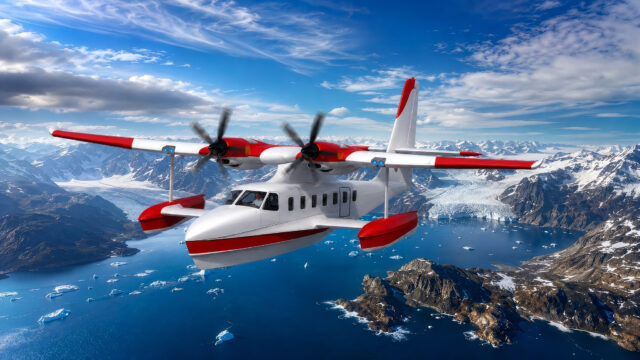

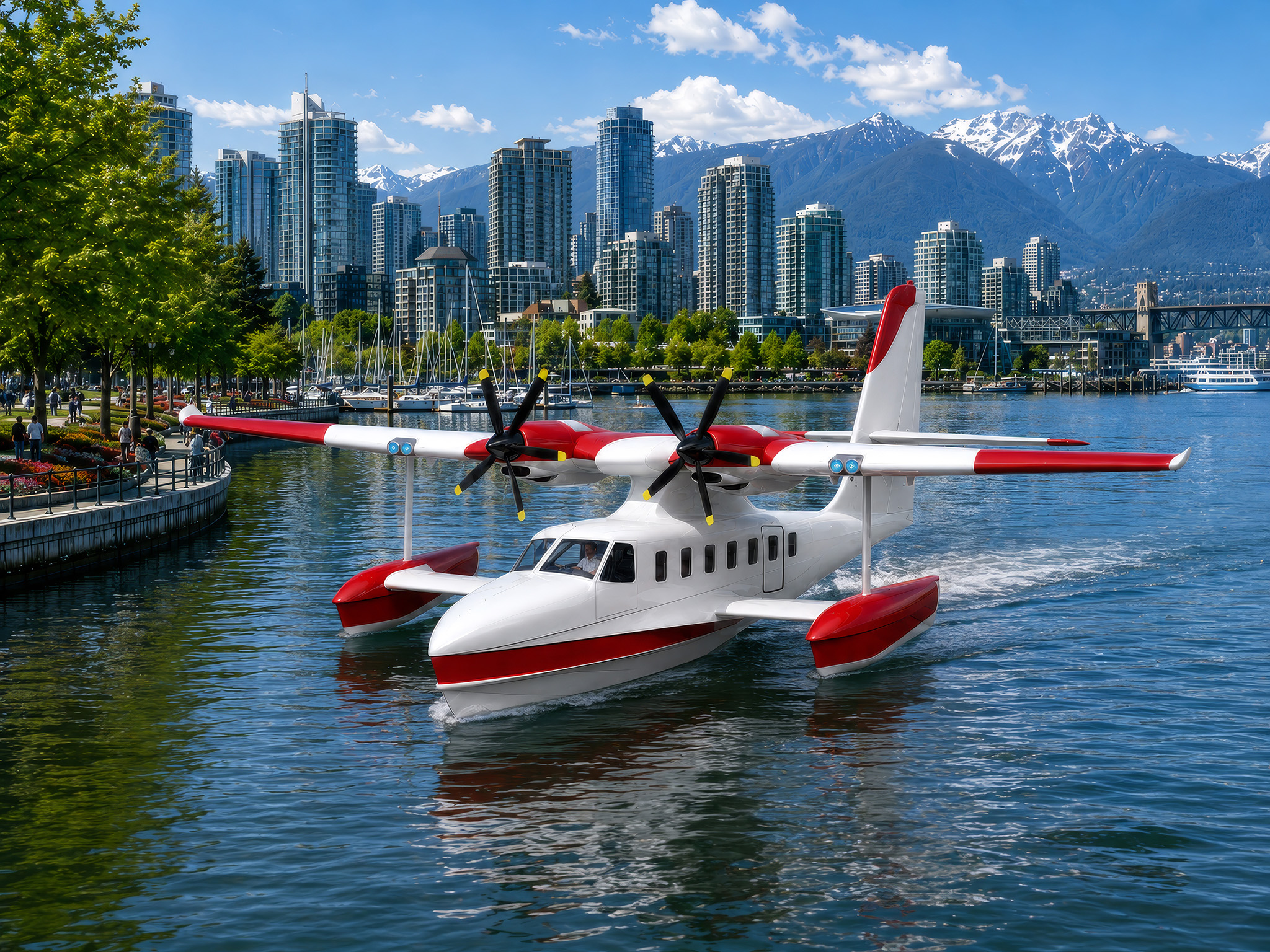

Annex: The Designer, the Pilot and the Ocean 18 Engine Debate
Herein lies the choice for the twin-engine Ocean 18.
The aircraft designer wants the PT6A-34.
The pilot wants the PT6A-140.
The designer begins with an engineering analysis.
The pilot begins with memories of a dark, windy coastline, rough water, large waves, a fully loaded aircraft and the need to get airborne now before a storm pins him down.
Both approaches have merit.
Only one of us, however, has to explain why the aircraft is still on the water.
The Opening Positions
Designer: The PT6A-34 produces 750 shaft horsepower. Two engines provide 1,500 shaft horsepower. It is proven, widely supported and familiar from the Series 400 Twin Otter and other utility aircraft. It should cost less to acquire and overhaul. It may also reduce installation weight, cooling requirements and structural loads.
Pilot: The PT6A-140 produces 867 shaft horsepower. Two engines provide 1,734 shaft horsepower. That is 234 additional horsepower, or approximately 15.6 percent more rated power for the aircraft.
Designer: Horsepower is not free.
Pilot: Remaining on the water is costly.
Round One: Water Takeoff
Pilot: A Coast Guard aircraft may have to take off at a high operating weight, with sensors, survival equipment, medical equipment, crew, fuel, and possibly rescued passengers. It may be operating in strong wind and high waves.
The additional power does not merely improve the rate of climb. It can reduce the time spent accelerating on the water, lower the wave impact loads, and improve the take-off margin available when conditions are worse than forecast.
Designer: Ocean’s hull is specifically intended to reduce hydrodynamic drag. If the manufacturer achieves the claimed reduction, the aircraft may not need the larger engine to meet its takeoff requirements.
Pilot: That is an argument for using the extra power more effectively, not for giving it away.
A lower-drag hull and a higher-powered engine are not mutually exclusive. Together, they may enable shorter water runs, higher mission weights, improved glassy-water performance on hot days, or lower power settings during routine operations.
Round Two: One Engine Inoperative
Designer: The aircraft must meet its certification requirements with either engine choice. We do not select an engine simply because the larger number is comforting.
Pilot: In a twin-engine aircraft, during an inadvertent power-down, the remaining engine’s power matters. With one PT6A-34 operating, the nominal rated power is 750 shaft horsepower. With one PT6A-140 operating, it is 867. That additional 117 horsepower will become valuable after an engine failure at high weight, with mission equipment installed, in icing conditions or during a missed approach.
It guarantees a particular climb rate. Propeller efficiency, drag, weight, air temperature, altitude, asymmetric thrust and airframe limitations still govern the result, but with proven power the aircraft can be rated for single-engine-out IFR operations. The Amphibious Twin Otter, on Wipline 13000s, with -34s, does not meet those performance minimums at Max Gross Weight and is not approved for some IFR departure criteria. The Ocean 18 needs to be capable of meeting all IFR capabilities.
Designer: More power also increases minimum-control speed, structural loads and propeller considerations, which may involve re-engineering.
Pilot: That is why we have engineers.
Round Three: Fuel
Designer: The larger engine will consume more fuel.
Pilot: At full rated power, yes, because it is producing more power.
The correct comparison is not simply hourly fuel flow at maximum power. It is the fuel burned to complete the actual mission.
If the larger engine shortens the water run, improves climb, allows an earlier power reduction, or carries the required payload without an intermediate fuel stop, the mission result may differ from the POH comparison.
Designer: That requires performance modelling.
Pilot: Excellent. Let us model it.
Round Four: Cost
Designer: The PT6A-34 will be less expensive to acquire and overhaul. It has a mature support base, better power-by-hour coverage, and a large population in utility aircraft. Lower engine costs reduce aircraft price, lease rentals and maintenance reserves.
Pilot: Agreed.
The PT6A-34 may win if the Ocean 18 meets all Coast Guard requirements with adequate margins under realistic mission weights and Gross Weight IFR departure criteria.
But the analysis must include the cost of capability shortfalls. What is the cost of leaving payload behind? What is the cost of a fuel stop? What is the cost of cancelling a mission because wave, temperature or weight conditions have consumed the available margin? The cheaper engine is not automatically the cheaper aircraft.
Round Five: Modern Controls
Pilot: The PT6A-140 has modern controls, trend monitoring and better protection against overtorque and overtemperature.
Designer: Stop there.
The standard PT6A-140 is not the PT6E-67XP and does not inherently provide Pratt & Whitney’s full electronic propeller and engine control system.
We can design a modern installation with digital engine indication, exceedance recording, engine trend monitoring and extensive data capture. We may be able to incorporate certified limiting or protective functions. But we cannot advertise automatic overtorque and overtemperature protection until the selected engine, propeller, control system and aircraft installation actually provide it.
Pilot: So the -34 can have modern monitoring?
Designer: Yes.
Pilot: Can it tell the maintenance department what I did?
Designer: In considerable detail.
Pilot: I withdraw the question.
Round Six: Maintenance
Designer: The PT6A-34’s mature overhaul network is a major advantage. Its shop visits may be less expensive, and operators have decades of experience with the engine.
Pilot: Which supports the argument for building an overhaul center in Winnipeg.
Designer: It supports the argument for studying one.
A center may initially find more work among established PT6 variants than among new PT6A-140 engines. The maintenance business case must therefore cover King Air, Caravan, Twin Otter, PC-12 and other western fleets rather than rely upon Ocean production alone.
Pilot: On that point, we agree.
The Decision Rule
The PT6A-34 should be selected if the certified Ocean 18 mission analysis demonstrates that it can meet Coast Guard payload, water-takeoff, climb, one-engine-inoperative, icing, range and reserve requirements with comfortable margins and materially lower lifecycle cost.
The PT6A-140 should be selected if the additional 117 horsepower per engine materially improves rough-water departure, high-weight performance, one-engine-inoperative capability or mission flexibility to a degree that justifies its higher acquisition and maintenance costs.
My pilot’s vote remains with the PT6A-140, although I yearn for the PT6E-66XT. A pilot can dream.
The designer has gone out sailing….
PT6E-66XT Key Specifications & Features
- Integrated Control: It is the first engine family in the general aviation market to use a dual-channel integrated electronic propeller and engine control system.
- Simplified Operation: A single, intuitive lever controls everything from engine start to propeller management, reducing pilot workload and providing full-flight-envelope protection.
- Performance: Provides 100% of its torque at take-off, with up to 5% increased mechanical shaft horsepower (SHP) and 4% increased thermodynamic equivalent shaft horsepower (ESHP) over previous models.
- Sustainability: Fully certified to operate using Sustainable Aviation Fuels (SAF).
- Data Intelligence: Over 100 digital data inputs are used to optimize engine power, speed, and fuel burn across all flight phases. Full-flight data can be accessed directly on mobile devices.
Maintenance & Reliability
The PT6E-66XT Engine is designed to increase “time on wing” and simplify maintenance.
- Overhaul Intervals: The Time Between Overhaul (TBO) has increased by 43%, now reaching up to 5,000 hours.
- Maintenance Reduction: A 40% reduction in scheduled line maintenance and a 50% increase in minor engine intervals to 300 hours.